


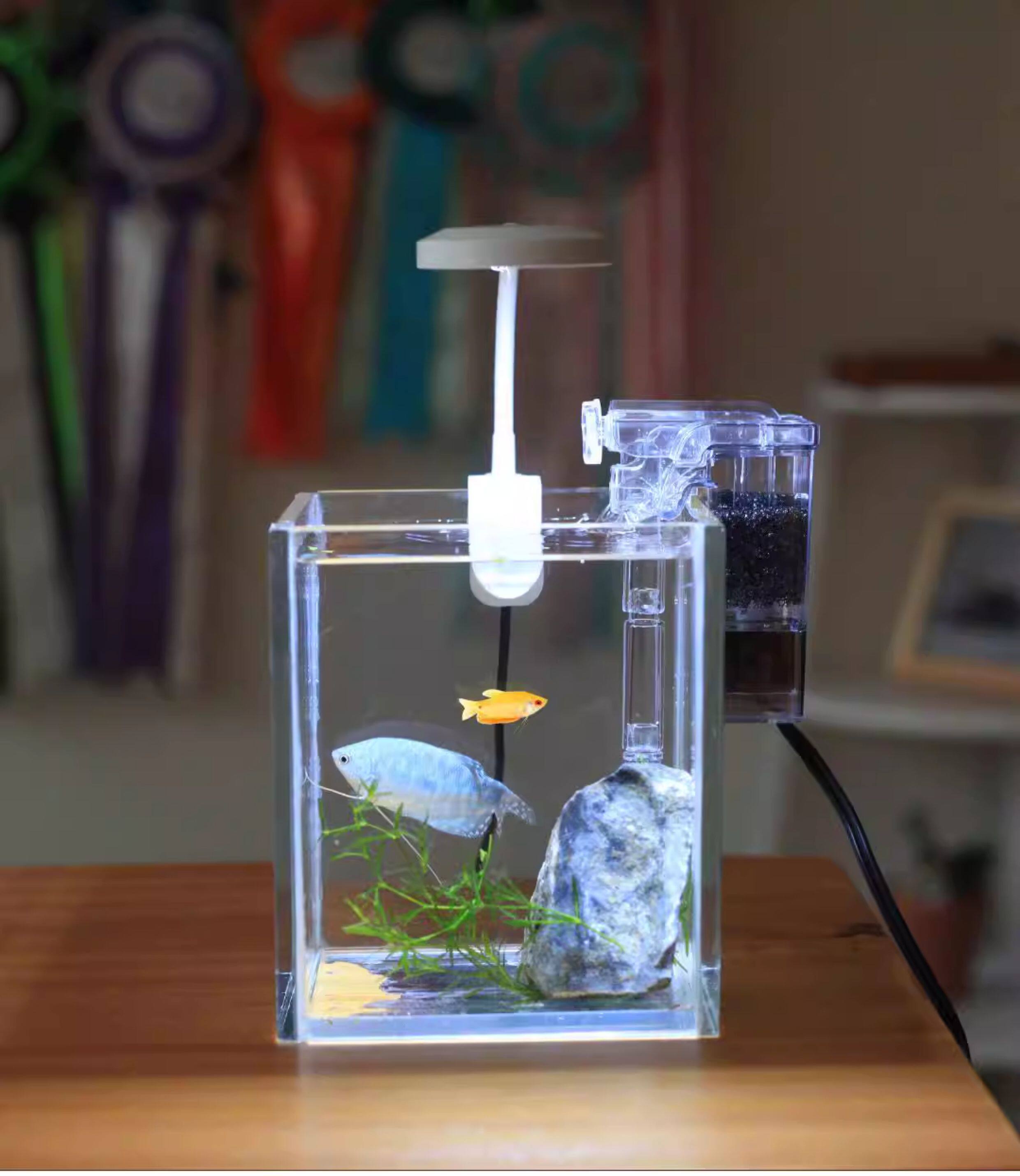
I remember the first mature I set going on a 20-gallon long. I was optimistic. I was naive. I thought five fancy goldfish would see "cute" in there. Three weeks later, my room smelled in the manner of a swamp, and my fish were gasping at the surface. That was my first brutal lesson in Bioload Levels and why a Tank Calculator Fish mindset is the only issue standing in the company of you and a awashed grave for your pets. We all desire that lush, animate Aquatic Environment, but if we don't idolization the math, our fish pay the price.
Lets be real. Most people think as long as the fish can physically swim from one side to the other, the tank isn't full. That is a lie. A risky one. The authenticated talent of your tank isn't about brute space; its just about waste management. Its roughly how much organic gunk your Beneficial Bacteria can eat before the water turns toxic. If you want a wealthy ecosystem, you habit to understand the invisible dance of Ammonia Spikes and Nitrate Accumulation.
When we talk virtually a Tank Calculator Fish approach, we aren't just talking more or less a literal app. We are talking roughly a mental framework for measuring how much pressure each inhabitant puts upon the Nitrogen Cycle. every fish is a little pollution factory. They eat, they breathe, and they excrete. This total output is your Bioload Levels. If your Filtration System can't save up, you're toast.
I considering met a boy at a local fish store who swore by the "Gulp Factor." Its a bit of an old-school, slightly rogue concept, but it works. He argued that the amount of water a fish "gulps" per minute tells you more roughly its impact on the Aquatic Environment than its length. A slow-moving Betta has a low Gulp Factor. A hyperactive Danio? Much higher. This determines how quickly they deplete Dissolved Oxygen and liberty waste. subsequent to you use a Tank Calculator Fish strategy, you have to account for these metabolic rates.
The industry conventional used to be the "one inch of fish per gallon" rule. Honestly? That rule belongs in the trash. Its a holdover of an become old in the manner of we didn't understand water chemistry. You cannot compare one inch of a slender Neon Tetra to one inch of a chunky Oscar. The Oscar has ten era the accumulation and produces fifty get older more waste. This is where Stocking Density becomes a science rather than a suggestion. To preserve healthy Bioload Levels, you have to see at the addition and the diet of the creature, not just its ruler length.
One business Ive started doingand this might hermetically sealed a tiny out thereis tracking the "Bio-Spark" of my tank. This is a concept where you conduct yourself the micro-electrical conductivity changes in the water after feeding. tall levels can signal an impending Nitrogen Cycle crash since your test strips even face colors. It's a proactive way to run your Aquatic Environment using avant-garde tech. If your Tank Calculator Fish data suggests youre at 80% capacity, but your Bio-Spark is erratic, youre actually overstocked.
Lets get into the nitty-gritty. all species has a every other "waste footprint." If youre pushing the limits of your Bioload Levels, you habit to know who the oppressive hitters are. Goldfish, Oscars, and large Cichlids are the heavyweights. They are messy eaters and even messier roommates. If you are using a Tank Calculator Fish tool, youll broadcast these species require enormous Water Volume to dilute their output.
On the extra hand, shrimp and small snails have a negligible impact on Bioload Levels. In fact, they can sometimes back by cleaning happening detritus. But don't be fooled. Even a "clean-up crew" adds to the sum Stocking Density. You can't just keep toting up snails to fix a dirty tank; eventually, the snails themselves become the problem. I instructor this the difficult habit when a snail population explosion led to a deafening Ammonia Spike that wiped out my prized Guppies. It was a total disaster. I felt gone a failure, honestly.
Your Aquatic Environment is as a consequence heavily influenced by the Surface Area of the tank. A tall, narrow "hexagon" tank might have the same number of gallons as a usual rectangular tank, but it has much less Surface Agitation and gas exchange. similar to calculating Bioload Levels, I always say people to prioritize length and width higher than height. More surface area means more Dissolved Oxygen, which supports the Beneficial Bacteria needed to process waste.
Wait, I should probably reference the "Pheromone Saturation Index" (PSI), a creative metric Ive been experimenting with. In overstocked tanks, fish release make more noticeable pheromones. Even if your Water Parameters are absolute on paperno ammonia, no nitritesthe fish might still exploit lethargic or aggressive. Thats because the PSI is too high. A fine Tank Calculator Fish mindset accounts for the psychological publicize of the fish, not just the chemical space. If your fish see miserable, the Bioload Levels are effectively too high for that specific community.
If youre dead set on a high Stocking Density, your Filtration System needs to be absolute overkill. Im talking very nearly a canister filter rated for double your tank size. You craving enormous amounts of biological media to house the colonies of Beneficial Bacteria that keep the water safe. Without this, your Bioload Levels will spiral out of control within days.
I recall my friend Dave. Dave had a 55-gallon tank packed taking into account African Cichlids. It was technically "overstocked" by any pleasing Tank Calculator Fish app. But Daves water was crystal clear. Why? Because he had dual-stage filtration and did 50% water changes all four days. He was manually compensating for the tall Bioload Levels. Its a lot of work. If youre indolent (like me upon some Sundays), dont overstock. Its an uphill battle that you will eventually lose past vibrancy gets in the habit and you skip a grant day.
Nitrate Accumulation is the quiet killer in high-bioload systems. even if ammonia and nitrite are brusque threats, nitrates creep happening on you. They stunt growth, weaken immune systems, and guide to "old tank syndrome." To keep your Aquatic Environment stable, you dependence to monitor these levels weekly. A robust Tank Calculator Fish plan includes a scheduled plot for water export. You have to agree to the bad out to save the good in.
Ive afterward found that count breathing plantsspecifically fast-growing directionless plants subsequent to Frogbit or Salviniaacts as a natural buffer for Bioload Levels. They suck taking place nitrates afterward a sponge. Its concerning later having a second, silent Filtration System. However, be careful. If the flora and fauna die and rot, they contribute to the enormously Ammonia Spikes youre aggravating to prevent. Its all just about balance.
Sometimes, I think we get too caught in the works in the numbers. We look at the Tank Calculator Fish results and think we have a "green light." But your eyes are your best tool. Is there algae everywhere? Are the fish shimmying? Is the water cloudy? These are creature manifestations of high Bioload Levels that a computer might miss. all tank has its own personality. Some tanks are "tough" and can handle a little further waste; others are fragile and smash the moment you build up one extra Tetra.
So, how do we actually locate that charming spot? First, end thinking just about the maximum you can fit. Think very nearly the minimum needed for the fish to flourish. considering you demean your Bioload Levels, anything becomes easier. Your Water Parameters stay stable. Your fish fake augmented colors. You spend less get older scrubbing algae and more era actually enjoying the view.
When using any Tank Calculator Fish resource, always input your instruction conservatively. If your tank is 29 gallons, calculate for 25. Why? Because of displacement. Your substrate, rocks, and driftwood undertake going on space, reducing the actual Water Volume. I see people create this error all the time. They think they have 30 gallons of water, but after all the decor, they truly without help have 22. Thats a big difference subsequent to it comes to diluting toxins.
Increasing Surface Agitation is unconventional "pro-move" that people overlook. A easy ventilate stone or a well-placed powerhead can significantly boost the carrying skill of your Aquatic Environment. More oxygen means more efficient bacteria. More efficient bacteria means more nearby Bioload Levels. Its a simple chain recognition that makes your animatronics 100% easier.
Ill depart you with this: the endeavor isnt to look how many fish you can keep alive. The objective is to see how many fish can thrive. There is a enormous difference amongst "surviving" and "thriving." A fish steadfast high Bioload Levels is stressed, prone to disease, and won't living a full life. A fish in a balanced Aquatic Environment is a joy to watch. Use the Tank Calculator fish tank calculator tools as a guide, not a law. hear to your tank. Watch the Nitrogen Cycle. And for the love of everything, don't put five goldfish in a 20-gallon tank. Ive been there. Its not "cute." Its an ammonia-laden nightmare.
Keep your Stocking Density reasonable, your Filtration System strong, and your curiosity high. The commotion is expected to be relaxing, not a constant race to fix Ammonia Spikes. If you glorification the biology, the chemistry will tolerate care of itself. happy fish-keeping, and may your nitrates always be low and your Dissolved Oxygen always be high! Remember, a healthy tank is a quiet tank, where the only thing you have to make miserable about is which supplementary reforest to buy next. Don't let the Bioload Levels acquire the best of you. You've got this. I think. Just maybe don't buy that Oscar yet, okay?